The History and Evolution of the Plus (‘+’) Symbol in Mathematics
The plus sign (+) is one of the simplest, most universal symbols in the world.
We see it on calculators, spreadsheets, medicine bottles, social media (“+1”), programming languages, and in every branch of mathematics.
It looks trivial — two intersecting lines.
But those two lines carry a story that runs through medieval manuscripts, merchant bookkeeping, the printing press, linguistic evolution, algebraic revolution, and even religious and medical symbolism.
The plus sign was not invented in a single moment.
It evolved.
1. Before Symbols: When Addition Was Written in Words
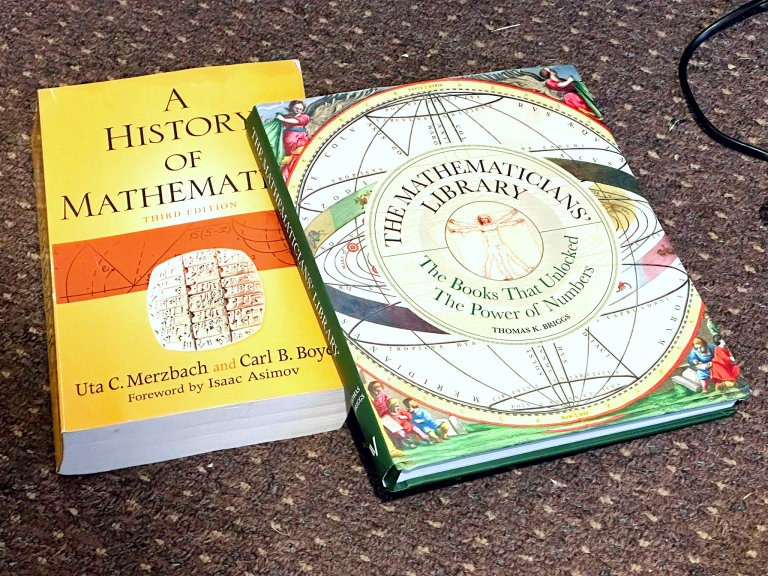
For most of human history, addition had no dedicated symbol. I love my mathematical history as I wrote about before.
Ancient Egyptians, Babylonians, Greeks, and Romans expressed addition in one of two ways:
- By writing numbers next to each other (juxtaposition), or
- By spelling out the operation in words.
Greek mathematics was rhetorical. Roman texts often inserted the word et (“and”) between quantities.
If someone in 12th-century Europe wanted to write:
7 + 13
they would likely write:
7 et 13
Mathematics was verbal before it became symbolic.
2. The Turning Point: The Latin Word et
The story of the plus sign begins with a small Latin word:
et = “and.”
In late medieval Europe — especially in commercial “abbacus schools” in Italy, Germany, and the Low Countries — arithmetic was taught for trade. Speed mattered.
Scribes and merchants abbreviated constantly.
The word et was frequently compressed:
- Letters fused together.
- The “t” was simplified.
- In rapid writing, it sometimes reduced to a small cross-like mark.
That cross-like abbreviation began appearing in handwritten merchant ledgers and arithmetic manuals.
It was not standardized. It varied by region and by hand.
But the shape was emerging.
The plus sign was born in handwriting.
3. Two Descendants of et: + and &
The Latin et produced two different graphical descendants.
The Ampersand (&)
In Roman cursive, scribes often joined the letters e and t into a flowing ligature. Over centuries, this fused form evolved into the ampersand (&).
You can still see it:
& = stylised e + t
When printing developed in the 15th century, the ampersand was preserved as a single typographic character. In English, it was once considered the 27th letter of the alphabet. Children recited:
“… X, Y, Z, and per se and.”
“And per se and” eventually contracted into the word ampersand.
The ampersand is the calligrapher’s et — decorative, literary, typographic.
The Plus Sign (+)
Meanwhile, in commercial arithmetic, a faster shorthand of et developed. Instead of a flowing ligature, scribes simplified the mark into intersecting strokes.
- became the merchant’s et.
One root. Two evolutions.
4. Printing Gave It Wings: Widmann, 1489
The printing press did not invent the plus sign — but it made it universal.
In 1489, Johann Widmann printed a commercial arithmetic book in Leipzig:
Behende und hübsche Rechenung auff allen Kauffmanschafft
(“Nimble and neat calculation in all kinds of trade”)
In this text, he used:
- to indicate surplus
− to indicate deficit
Importantly, this reflected notation already circulating in merchant handwriting. Widmann did not create the symbol from nothing.
But printing changed everything.
It:
- Fixed a consistent glyph in movable type.
- Distributed the symbol geographically.
- Allowed teachers to standardise instruction across regions.
- Reduced local stylistic variation.
Handwriting created the symbol.
Printing industrialised it.
5. The Words “Plus” and “Surplus”
The word “plus” predates the symbol.
It comes from Latin plus, meaning “more.” It entered Old French and later Middle English with the same meaning.
The word “surplus” comes from Old French surplus:
sur = over
plus = more
Literally: “over-more.”
In Widmann’s 1489 book, the + symbol meant surplus, not abstract addition. A line such as:
7 + 13
did not mean “seven plus thirteen equals twenty” in the modern sense. It indicated something closer to “7 more to make 13” within merchant accounting logic.
Commerce is where the word and the symbol converged.
Only during the 16th century did mathematicians begin explicitly calling the symbol “plus” and using it for formal addition in algebra.
Language and notation fused through trade. Check out more mathematical etymology on my site.
6. From Commerce to Algebra
During the 16th century, the symbol migrated from merchant books into mathematical texts.
Michael Stifel (1544) used + in algebraic contexts.
Robert Recorde introduced it into English mathematics in 1557, writing:
“There be two signes of moste notable use, that is to saye, the signe of addition +, and the signe of subtraction −.”
By the late 16th century, the plus sign had crossed from accounting into algebra.
7. Full Standardization: The Algebraic Revolution
The late 16th and early 17th centuries saw a symbolic revolution in mathematics.
François Viète and later René Descartes formalised algebraic notation. By the time Descartes published La Géométrie in 1637, the plus sign was firmly embedded in European mathematics.
From that point onward, + was no longer commercial shorthand.
It was a foundational operator.
8. Crosses Beyond Mathematics
The cross shape itself is far older than the plus sign.
Two intersecting lines appear throughout human history.
Christian Cross
A central symbol of Christianity representing the crucifixion of Jesus Christ. Variants include the Latin cross, Greek cross, and Celtic cross. Its influence across Europe deeply shaped the cultural recognition of cross-like symbols.
The Red Cross
Established in the 19th century as the emblem of the International Committee of the Red Cross. The red cross on a white background is legally protected under the Geneva Conventions. It may not be used for commercial purposes.
The Green Pharmacy Cross
Because the Red Cross symbol is legally protected and restricted, pharmacies in many European countries adopted a green cross as a distinct, non-infringing medical symbol.
The colour change was not arbitrary — it avoided legal conflict while retaining the visual power of the cross shape. Over time, the illuminated green cross became standard pharmacy signage in France, Italy, Spain, Germany, and beyond.
Though it looks identical to “+”, its meaning is medical and commercial — not mathematical.
Ancient Cross Motifs
Cross shapes appear in prehistoric carvings, Mesopotamian artefacts, Egyptian ankhs, Celtic sacred sites, and indigenous cosmologies — often symbolising balance, life, or the intersection of worlds.
The form is ancient.
The mathematical meaning is comparatively recent.
Timeline Summary: The Evolution of +
| Period | Medium | Meaning of the Cross Shape | Status of “+” |
|---|---|---|---|
| Ancient world | Words & rhetoric | “And” written in text | No symbol |
| Medieval manuscripts | Handwritten shorthand | Abbreviation of et | Emerging mark |
| 1489 (Widmann) | Printed arithmetic | Surplus / deficit | First mass printing |
| 16th century | Print + manuscript | Algebraic addition | Rapid spread |
| 17th century | Formal mathematics | Standard operator | Fully embedded |
| Modern era | Global usage | Addition, positivity, logic | Universal |
Linguistic and Symbolic Divergence
| Symbol | Origin | Domain | Evolutionary Path |
|---|---|---|---|
| & | Ligature of et | Writing & typography | Decorative preservation |
| + | Abbreviation of et | Arithmetic & algebra | Functional simplification |
One remained ornamental. One became operational.
Modern Usage and Legacy
Today, the plus sign means:
- Arithmetic addition
- Positive value
- Logical and programming operations
- “More” in branding and marketing
- Social media endorsement (“+1”)
What began as a scribal abbreviation of “and” became one of the most powerful abstract operators in mathematics.
Two lines crossing. From ink to commerce to print to algebra.
A small symbol. A long evolution.
(This post was written with the help of ChatGPT by Open AI after several prompts)